
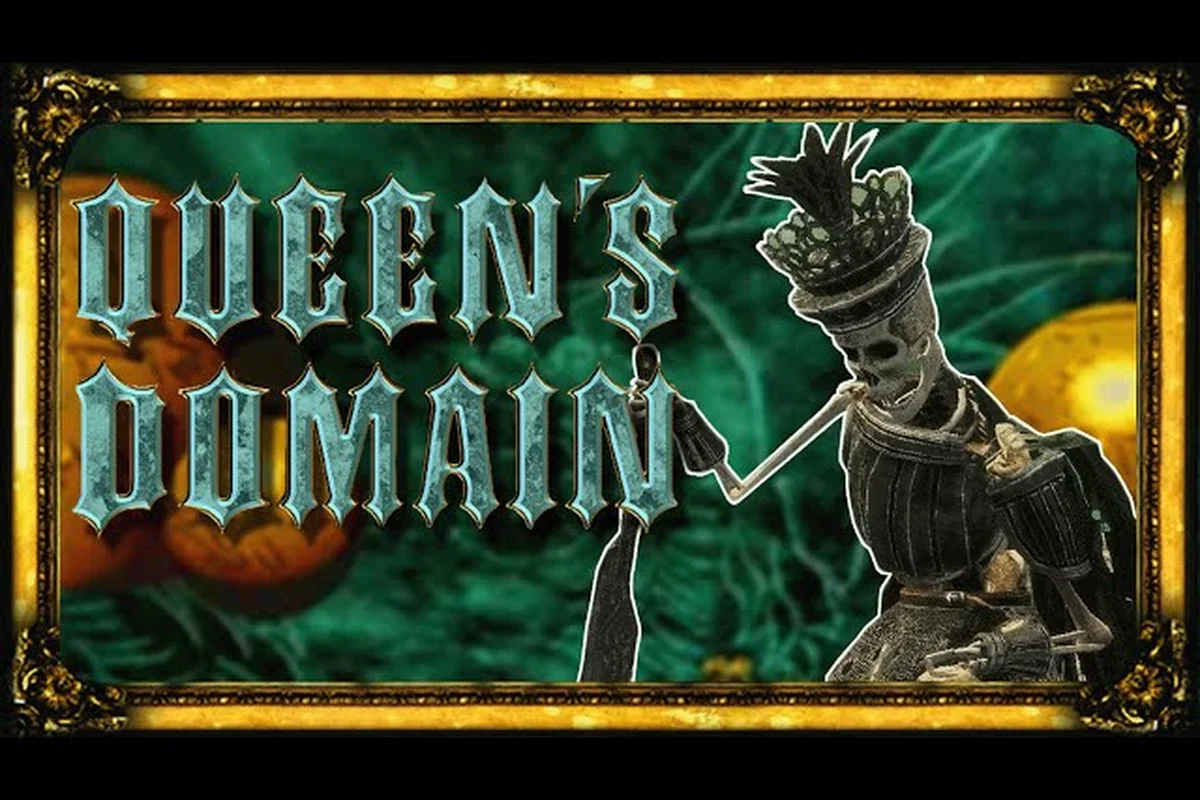
Queen's Domain vs King's Field is easy to misread because reviewers use the older action RPG as a shorthand for mood rather than mechanics. The useful question is which documented systems shape the experience, what players must verify themselves, and whether the $19.99 entry point suits them.
Why Queen's Domain vs King's Field Comparisons Need Context
King's Field frequently appears in coverage because both games place a first-person viewpoint at the center of retro-fantasy exploration, but that association does not make their systems interchangeable. Queen's Domain is built around stamina-managed melee combat, charge attacks, weapon-specific special attacks, throwing tools, flight, and interconnected island paths. Those details matter because they explain how encounters actually play, while the King's Field label mostly describes an atmosphere and broad genre lineage.
The distinction is especially important when searching for games like Queen's Domain. A comparison based on appearance alone may promise a moody dungeon crawler but overlook the stamina economy, the central role of the Holy Sword Endu, or the extent to which food, life charms, and equipment upgrades influence a run. A comparison grounded in confirmed mechanics offers a more honest basis for deciding whether this is the right action RPG for you.
| Comparison signal | What reviewers can responsibly mean | What it does not prove |
|---|---|---|
| King's Field reference | Retro first-person presentation and exploration mood | Identical enemy design, progression, controls, or combat rules |
| “Souls-like” description | Possible action-RPG expectations | Multiplayer, co-op, parrying, elaborate build trees, or a specific difficulty model |
| “Old-school dungeon crawler” description | Deliberate retro styling and exploration | A confirmed number of floors, linear levels, or classic grid movement |
| Official feature list | Flight, stamina combat, charge attacks, special attacks, throwing weapons, and upgrades | Features that the developer has not documented |
The primary keyword in this Queen's Domain vs King's Field comparison is therefore a lens for expectation-setting, not a claim that one game is a remake or spiritual successor of the other. The official materials describe Queen's Domain as a first-person retro-fantasy action RPG and dungeon crawler set on the Isle of Neasied. The official Queen's Domain Steam page is the best source for checking its current feature list and store information.
Separating genre heritage from documented behavior
A reviewer may connect Queen's Domain to King's Field, Morrowind, Ico, Shadow of the Colossus, Vagrant Story, Dark Souls, or Elden Ring because each provides a shorthand for some part of the experience. Those names are useful as media framing, but they are not authority for Queen's Domain mechanics. For example, descriptions of the player searching for a missing father fit a broad adventure tradition, while they do not establish a dialogue system, quest journal, NPC network, or number of chapters.
The same rule applies to combat. Media previews mention parrying, but the developer has not documented a parry or block system as of 2026-10-31. It would therefore be misleading to tell a prospective buyer that the game definitely includes parrying. By contrast, the official store page directly confirms a stamina-based combat system, charge attacks, and a unique special attack for each melee weapon. That is the more useful foundation for judging the game.
A buyer can perform a simple evidence check before purchasing: identify the Queen’s Domain store page or developer material, then compare each claimed mechanic against the game’s actual footage or official description. A preview saying the combat resembles King’s Field may support a broad comparison, but it does not verify a parry system, a fixed chapter count, or a specific progression structure; those are different claims and should be checked separately.
-
Open the official store page and note the current price, platform features, and stated systems.
-
Separate developer-confirmed statements from preview language and creator comparisons.
-
Mark parrying, level caps, difficulty options, healing rules, and exact completion time as unverified unless the game itself demonstrates them.
-
Compare those expectations with the type of progression you actually want rather than the names used in headlines.
-
Use the demo, if available on the chosen platform, to test combat timing, movement, and your tolerance for repeated traversal.
What the comparison tells you at a glance
Queen's Domain shares broad presentation cues with King's Field: a first-person camera, an older-inspired fantasy world, and the sensation of entering dangerous spaces alone. However, the confirmed mechanics point toward a more specific identity. Flight is a primary traversal tool, cliffs gate progress, and weapon variety is unusually prominent in the documented feature set.
That makes the King's Field comparison useful for readers drawn to atmospheric exploration. It is less useful for readers who want to know whether Queen's Domain recreates King's Field's exact combat. There is no official basis for claiming that it does. The better framing is: Queen's Domain offers familiar retro action-RPG energy with its own documented systems, and the purchase should be based on those systems rather than a borrowed legacy.
Morrowind and Ico Comparisons in Context
Morrowind and Ico are often used because each emphasizes something different from King's Field: Morrowind suggests an open-ended first-person RPG with exploration and player-directed discovery, while Ico suggests lonely, atmospheric movement through a strange world. When media apply those descriptions to Queen's Domain, they are compressing its identity into a few emotional and structural ideas. They should not be read as a promise of the respective games' full systems.
Queen's Domain is explicitly described as an interconnected island with secrets and shortcuts. Its story premise sends the player ashore on the Isle of Neasied to look for a missing father and uncover the island's dark heart while a sleeping Queen begins to stir. That supports the open-ended exploration part of the comparison. It does not establish Morrowind-style faction reputation, dialogue-driven quests, crafting, or a skill system.
Ico, meanwhile, has a visual and emotional reputation for quiet isolation and companionship. Queen's Domain does share a first-person presentation and can create moments of isolation, but its confirmed combat loop is more involved than a simple examination of an environment. Stamina, charge attacks, melee specialization, and secondary throwing weapons give the player several ways to respond to danger.
| Media comparison | What it usefully suggests | Important limitation |
|---|---|---|
| Morrowind | Exploration, secrets, and a strong sense of a discoverable space | No documented promise of open-world quest freedom, factions, or dialogue |
| Ico | Atmospheric first-person wandering and isolation | No basis for assuming puzzle structure, escort mechanics, or a linear castle journey |
| King's Field | Retro action-RPG presentation and mood | No evidence that combat, progression, or levels copy King's Field |
| Shadow of the Colossus | A potentially misleading “colossal journey” association | No confirmed giant enemies or Colossus-style structure is documented |
The most accurate response to these comparisons is to treat them as expectation filters. If a game reminded you of Ico, perhaps the appeal is atmosphere. If Morrowind drew your attention, perhaps discovery matters more than combat complexity. If King's Field was the reference, perhaps the first-person retro style is the deciding feature. Each interpretation points to a different reason to consider Queen's Domain, but none establishes that it contains another game's mechanics.
How the island changes the comparison
The official material describes one interconnected island rather than a numbered collection of dungeon floors. There is no published world map, region list, chapter structure, or floor count as of 2026-10-31. That absence makes labels such as “open world” and “dungeon crawler” both partially useful and potentially misleading. The island supports exploration, shortcuts, secrets, and cliff-gated progression, but its exact degree of freedom must be verified in game.
Traversal is a central documented difference from the comparison shorthand. The Legendary Holy Sword Endu lets the player fly between platforms and across gaps, while upgrades extend its flight distance. This creates a recurring route-solving decision: take an existing path, seek a shortcut, or use upgraded flight to open a previously inaccessible route. The official location names are limited to the Isle of Neasied and the Pit of Despair, so detailed walkthrough labels should not be inferred from achievement names or preview footage.
For readers choosing among games like Queen's Domain, consider whether traversal itself is a selling point. If discovery through one connected space sounds engaging, the island and flight provide documented reasons to investigate. If uninterrupted dungeon corridors and frequent backtracking feel more important, note that no official floor layout exists to confirm that structure.
Using comparisons without importing false mechanics
A safe comparison process keeps three columns separate, because a shared label such as “first-person fantasy adventure” can conceal major differences between Queen’s Domain and King’s Field. Check whether each feature is a media description, an official fact, or a personal test: for example, King’s Field’s first-person presentation and Queen’s Domain’s exploration framing may look comparable in a preview, but neither establishes the same combat depth, stamina handling, or weapon usefulness. This prevents resemblance in art direction or atmosphere from being mistaken for equivalent mechanics.
-
Media description: an analogy used in coverage, including Morrowind, Ico, or King's Field.
-
Official fact: a feature directly confirmed by the developer or store page.
-
Personal test: a behavior you must observe in the demo or full game.
For example, “stamina-based melee combat” is official. “The player can parry” is media-reported but not documented. Whether flight feels smooth, whether throwing weapons are useful, and whether a particular boss is difficult are personal tests. Keeping those categories distinct prevents a catchy preview headline from becoming a false product specification.
A deeper orientation resource is Queen's Domain basics and exploration guidance, which can help separate the island's broader premise from the specific systems discussed here. The key point remains the same: Queen's Domain resembles several older games in presentation and mood, while its own confirmed mechanics—not the comparison games' rules—should determine whether it fits your preferences.
Documented Features Versus Assumed Features in Queen's Domain
The best way to evaluate Queen's Domain is to separate what the developer has confirmed from what genre expectations encourage players to assume. The official feature set is substantial: a stamina meter, charge attacks, weapon-specific special attacks, more than 50 melee weapons, more than 20 types of secondary throwing weapons, XP leveling, food that raises stats, life charms, weapon upgrades, and evolving weapons. The island also includes more than 100 enemies, mini bosses, and bosses combined.
That creates a clear identity, but several frequently discussed details remain undocumented as of 2026-10-31. The official materials do not specify a parry or block system, exact stamina numbers, a level cap, enemy drop rates, boss health values, difficulty presets, or an exact completion time. They also do not publish a weapon or armor list beyond broad categories. Any guide naming individual swords, armor pieces, merchants, blacksmiths, regions, or bosses would be going beyond the official baseline.
| Topic | Confirmed by the developer | Not documented as of 2026-10-31 |
|---|---|---|
| Combat | Stamina meter, charge attacks, weapon-specific melee special attacks | Parry timing, block values, damage formula, exact stamina costs |
| Equipment | 50+ melee weapons, 20+ throwing types, upgrades, weapon evolution | Named weapon list, armor list, drop rates, upgrade costs |
| Enemies | 100+ enemies, mini bosses, and bosses combined | Individual boss names, health pools, AI patterns, spawn tables |
| Progression | XP, food raises stats, life charm raises life points | Level cap, stat formula, respec method, difficulty settings |
| World | One connected island, secrets, shortcuts, cliffs as gates | Map, region list, floor count, chapter structure, exact boss count |
| Duration | Developer describes at least 40+ hours | Guaranteed exact completion time or average playthrough length |
Verify mechanics without turning speculation into advice
Start with combat because it is the clearest purchasing criterion. Equip the starting weapon, attack normally, and then hold a charged attack until it releases. Watch whether the animation, stamina use, and enemy reaction create a meaningful decision. Test each available secondary throwing weapon against different enemy groups rather than assuming every category has an equal use.
Next, test recovery. Damage leads to death in most games, but the specific healing rules are not documented. Observe what happens when life points are low, which items restore them, whether restoration is instant or timed, and how the stamina meter behaves while health is low. These observations should remain personal test results rather than universal rules unless the developer documents them.
Exploration needs similar verification. Follow a cliff that appears to block progress, then locate or upgrade the Holy Sword Endu to see how flight changes the route. Check whether the island presents a clear signpost, a familiar shortcut, or a trial-and-test obstacle. Water return pits reportedly return the player after falling into water, but the exact trigger and placement are not documented, so test them in game.
The Queen's Domain beginner guide can support this first-session testing process by organizing the confirmed systems around practical decisions. The crucial rule is to distinguish observation from invention: if the game does not display a clear explanation, record what happened without presenting an inferred rule as an official feature.
Understand the named content conservatively
Only four creature names are documented: Mimic, Star Lizard, ojum lizard, and eye plants. The Executioner is not a documented boss; “Executioner door” refers to a door that could become stuck and was fixed in version 1.01.01. An ojum lizard can be cooked into roasted ojum lizard, but that food does not automatically guarantee a particular stat increase beyond the broader fact that food raises stats.
The Steam account lists 53 achievements, though only ten display names are public: Queen's Domain, Ocean Walk, Endless Pages, Unsealed Tomb, Genesis, Halls of Hatred, Dark Silence, Sacred Groves, Deep Mire, and Sin Keeper. Their unlock conditions are not documented, and an achievement title is not proof of a region, boss, chapter, or floor. This is particularly important when using the Queen's Domain vs King's Field comparison: a dungeon-like achievement name should not be converted into an invented map.
Evaluate depth by systems, not promised categories
The documented breadth supports a meaningful comparison table, but it does not establish build complexity or replayability. Weapon specialization and upgrades suggest variety, yet there is no official number of viable builds, no skill tree description, and no documented list of unique weapon effects. Treat the following as questions to investigate, not conclusions:
-
Do different melee weapons feel meaningfully distinct beyond their special attacks?
-
Can throwing weapons compete with melee tools in ordinary encounters?
-
Does upgrading flight alter exploration enough to justify revisiting earlier routes?
-
How much do food and life charms affect survivability in practice?
-
Do weapon evolution paths change play patterns or mainly improve numbers?
-
Is the at-least-40-hour estimate comfortable for the intended player, or dependent on slow exploration?
These checks convert an abstract question about depth into six observable tests, each tied to a documented system in Queen's Domain rather than to promotional descriptions of its many weapons and flight upgrades. For example, the 40-hour completion estimate can be tested against flight revisits, food and life charm survivability, and whether weapon evolution creates distinct play patterns; in a King’s Field comparison, the same framework would expose whether shorter, more directed runs still deliver comparable build experimentation. This makes “Is Queen’s Domain worth it?” less dependent on adjectives and more useful to a prospective buyer deciding where deeper progression and replayability matter most.
Is Queen's Domain Worth $19.99?
At a $19.99 base price, Queen's Domain offers a strong case for players who want a substantial retro action RPG with more than 100 enemies, dozens of melee weapons, secondary throwing tools, and an interconnected island. The developer's description of at least 40+ hours makes that price appealing on paper. At launch, however, a purchase should also account for early reviews, recent patches, platform fit, and the difference between a confirmed feature list and a mature roadmap.
The Steam snapshot on 2026-10-31 recorded 219 reviews with 94% positive feedback, earning a “Very Positive” label. That is a strong launch signal, but it is a snapshot rather than a guarantee about the full game's long-term balance. The store also reported 300,000 wishlists at launch. These figures support awareness and initial reception, though neither tells you whether the difficulty or progression pace will suit you personally.
| Buyer profile | Value at $19.99 | Main reservation to verify |
|---|---|---|
| Retro action-RPG fan | Strong, given first-person presentation, exploration, and combat options | Whether King's Field-style mood outweighs the different systems |
| Systems-focused melee fan | Potentially strong, with charge attacks, special attacks, throwing tools, and equipment variety | Exact depth and balance of weapon differences |
| Atmospheric explorer | Strong, given one connected island, secrets, shortcuts, and flight | Whether traversal feels rewarding or repetitive |
| Completionist | Appealing given 53 achievements and a 40+ hour estimate | Undisclosed achievement conditions and exact completion time |
| Quick-session player | Less certain because exploration and repeated combat may take time | Save frequency, session length, and difficulty are not documented |
| Competitive multiplayer buyer | Poor fit based on current information | The game is documented as single-player, with no multiplayer features announced |
The value calculation should use the $19.99 base price, not the launch-week 15% discount. That promotion was time-limited and should not be treated as a permanent price point. A permanent discount assumption could make the purchase look better than its regular cost.
Weigh launch evidence against missing information
Version 1.01.01 corrected a Pit of Despair soft lock, a freeze during weapon evolution, the stuck Executioner door, a Mimic freeze, missing water return pits around Neasied, and a floating Star Lizard bag. A large portion of the news feed concerns demos, hotfixes, milestones, pricing, and Steam Deck verification. There is no announced roadmap, DLC plan, future update date, or seasonal event as of 2026-10-31.
That makes the launch context somewhat less mature than the price might imply. The fixes are encouraging because they show the team addressing specific problems, but they do not establish what comes next. If platform-specific performance matters, check the current build rather than relying on a launch trailer. The game is Steam Deck and Steam Machine Verified and supports full controller input, including DualShock and DualSense.
Players shopping across hardware can also use the platform overview in Queen's Domain console and cross-platform details to check the documented PC, PlayStation 5, Xbox Series, and Nintendo Switch 2 release context. Cross-save and cross-play were not documented as of 2026-10-31, so they should not influence the comparison unless official confirmation appears.
A practical value checklist
Before paying full price, complete this sequence: first, compare Queen’s Domain’s charge attacks, throwing tools, and island traversal with King’s Field’s first-person momentum and dungeon exploration; next, check whether a 40+ hour estimate refers to campaign completion or includes optional areas and repeated farming. If Queen’s Domain relies on repeated gear or consumable grinding rather than meaningful build variety, its higher playtime may not justify the asking price compared with King’s Field’s tighter King’s Field-style progression.
-
Read the current store page: confirm the listed price, platforms, controls, and any updates newer than this comparison.
-
Check recent reviews and news: focus on reports involving progression, combat, crashes, and save behavior rather than isolated praise.
-
Test the demo: measure how charge attacks feel, how often throwing tools become tempting, and whether island navigation holds your attention.
-
Confirm hardware readiness: PC specifications are modest, but console users should verify the current platform build and performance.
-
Set a value threshold: if the demo does not make the combat and traversal compelling, the nominal 40+ hour figure will not rescue the purchase.
-
Avoid paying for imagined systems: do not value the game as a guaranteed parry-focused Souls-like or as a definitive King's Field successor without confirming the behavior in game.
A fair verdict on the price
Queen's Domain looks worth $19.99 for a buyer who values compact-price exploration, first-person retro aesthetics, stamina-driven combat, and a large documented collection of equipment and enemies. The value is less certain for someone who requires a parry system, extensive map documentation, multiplayer, a formal skill tree, or a stable long-term content roadmap before buying.
The answer to Queen's Domain worth it is therefore conditional but positive. The price is low relative to the developer's stated scope, and launch sentiment is encouraging. The best evidence will still come from a hands-on demo, especially for combat feel and progression pace. A $19.99 purchase is easier to justify when the core loop already feels engaging rather than when the length estimate alone drives the decision.
What a Souls or Elder Scrolls Fan Should Expect
A Souls or Elder Scrolls fan may recognize the first-person framing, but shouldn't assume that Queen's Domain reproduces the combat, progression, or online features of those franchises. Media use those comparisons because they offer familiar reference points. The confirmed systems point instead toward a stamina-focused melee action RPG with charge attacks, weapon-specific specials, throwing weapons, an interconnected island, and flight-based traversal.
That distinction is good news for players seeking a smaller-scale first-person action RPG. It is not good news for anyone whose purchase depends on elaborate character builds, extensive lore interactions, or a large multiplayer community. Queen's Domain is documented as single-player. No co-op, invasions, PvP, faction reputation, dialogue wheel, or settlement-building systems have been announced.
| Franchise-inspired expectation | Queen's Domain reality |
|---|---|
| Complex RPG character development | XP, food-based stat increases, life charms, and equipment are documented; deeper build trees are not |
| Precision defense around parry timing | Media reports mention parrying, but it is not documented as of 2026-10-31 |
| Online worlds and summoning | Single-player is the only documented mode |
| Dense dungeon loops | An interconnected island, secrets, shortcuts, and cliff gates are documented; floor count is not |
| Large mythological bestiary lore | More than 100 enemies are documented, but only four creature names and no individual boss names are public |
| Open-ended quest construction | The story concerns a missing father and the island's secrets; quest structures and faction systems are not documented |
Match the game to a specific play style
For an Elder Scrolls fan, the strongest case is exploration and item-driven discovery. The island contains secrets and shortcuts, and the documented arsenal includes 50+ melee weapons plus 20+ types of secondary throwing weapons. The bestiary also provides an in-game encyclopedia whose entries can be scrolled with a controller. Those details suggest a game where learning what the world and equipment contain may drive the experience.
The caution is that broad RPG terminology can create expectations the documentation does not support. There is no published list of factions, magical schools, skills, or dialogue systems. There is also no official world map. A player should judge the sandbox by observed routes and secrets rather than assuming a Morrowind-scale quest web. The broader explanation in Queen's Domain's systems and survival overview can help frame that distinction.
For a Souls fan, Queen's Domain is more straightforward to assess. The official features point toward melee timing, stamina management, charge attacks, and distinctive weapon techniques, but not the exact defensive systems or world structure associated with that comparison. The game may appeal to someone who wants readable first-person encounters and smaller areas rather than a vast, interconnected multiplayer ecosystem.
A useful pre-purchase test is to watch your own behavior during the demo: note whether you keep checking weapon and enemy stats, trying different melee techniques, or losing time to the in-game encyclopedia and shortcut discoveries. If combat timing and stamina management hold your attention more than quest hunting or faction management, Queen's Domain may fit the player's habits better than a larger, systems-heavy RPG.
-
Do you enjoy choosing between several throwing weapons while managing melee stamina?
-
Does learning enemy behavior through repeated attempts feel better than solving a dialogue quest?
-
Do you prefer shortcuts and platforming with flight to navigating a dense hub of menus?
-
Are you comfortable with a single-player world whose deeper details are not fully published?
If those answers are mostly yes, the franchise comparisons may be helping you locate the right genre. Queen's Domain leans on charge attacks, stamina management, weapon techniques, throwing weapons, shortcuts, and platforming with flight; King's Field is more associated with first-person dungeon exploration and methodical combat. If you need parrying, online play, elaborate stats, or a large quest network, Queen's Domain does not currently promise them, so judge it by the melee loop and sandbox discoveries rather than by the scope implied by a larger RPG.
Keep the comparison honest
Queen's Domain is not documented as a clone of King's Field, a spiritual successor to Morrowind, or a smaller Elden Ring. It is a distinct first-person retro-fantasy action RPG whose confirmed hook is a combination of stamina combat, broad equipment options, exploration, and flight. The older game names remain valuable because they communicate texture and audience expectations, but they become misleading when used to fill gaps in the official information.
For potential buyers, the decisive checklist is compact: check the latest store page, test the demo, verify current reviews and patches, and inspect the official Queen's Domain Steam news feed for changes since launch. Confirm controls, performance, and any feature you consider essential. Then compare the verified experience with your preferred combat depth and exploration structure.
The final takeaway for this Queen's Domain vs King's Field comparison is straightforward. Use King's Field, Morrowind, and Ico to understand atmosphere, not mechanics; use official documentation and hands-on testing to judge gameplay. At $19.99, Queen's Domain has a compelling scope-to-price proposition for a single-player retro action RPG, while the best buying decision depends on whether its stamina-focused combat and connected-island traversal deliver the experience you actually want.
Frequently Asked Questions
Is Queen's Domain similar to King's Field?
Both games use a first-person perspective and retro-fantasy presentation, but that similarity is mainly stylistic. Queen's Domain is documented with stamina combat, charge attacks, weapon-specific specials, throwing weapons, flight, and an interconnected island. Those confirmed systems differ from any assumption that it copies King's Field, and its parry system remains undocumented as of 2026-10-31.
Is Queen's Domain good for players who enjoy Morrowind?
It may suit players who prioritize first-person exploration, hidden secrets, shortcuts, and equipment variety. The game is set on one interconnected island and offers more than 50 melee weapons plus more than 20 throwing-weapon types. However, faction quests, dialogue-driven systems, a skill tree, and a published world map are not documented, so its exploration should not be assumed to match Morrowind's structure.
Does Queen's Domain have parrying or a block mechanic?
Media previews have described parrying, but the developer has not documented a parry or block system as of 2026-10-31. Confirmed combat includes a stamina meter, charge attacks, and a special attack for each melee weapon. Test those systems in the demo and verify whether any defensive mechanic appears in-game before buying on the strength of the parrying comparison.
Is Queen's Domain worth $19.99?
For most players drawn to a compact-priced, single-player retro action RPG, the documented scope supports a positive value case: 100+ enemies, 50+ melee weapons, 20+ throwing-weapon types, and an estimated 40+ hours. The launch price was $19.99 before any temporary discount. Judge the demo first, however, because combat feel, difficulty, healing rules, and long-term roadmap details are not fully documented.
Are there games like Queen's Domain with multiplayer?
Queen's Domain is documented as single-player, and no multiplayer, co-op, PvP, or cross-play features were announced as of 2026-10-31. Players seeking online action RPGs should not treat its first-person presentation as evidence of a multiplayer feature. The closest available comparison remains other solo retro-style action RPGs, but media descriptions of King's Field, Morrowind, and Ico should not be read as evidence of online systems.