
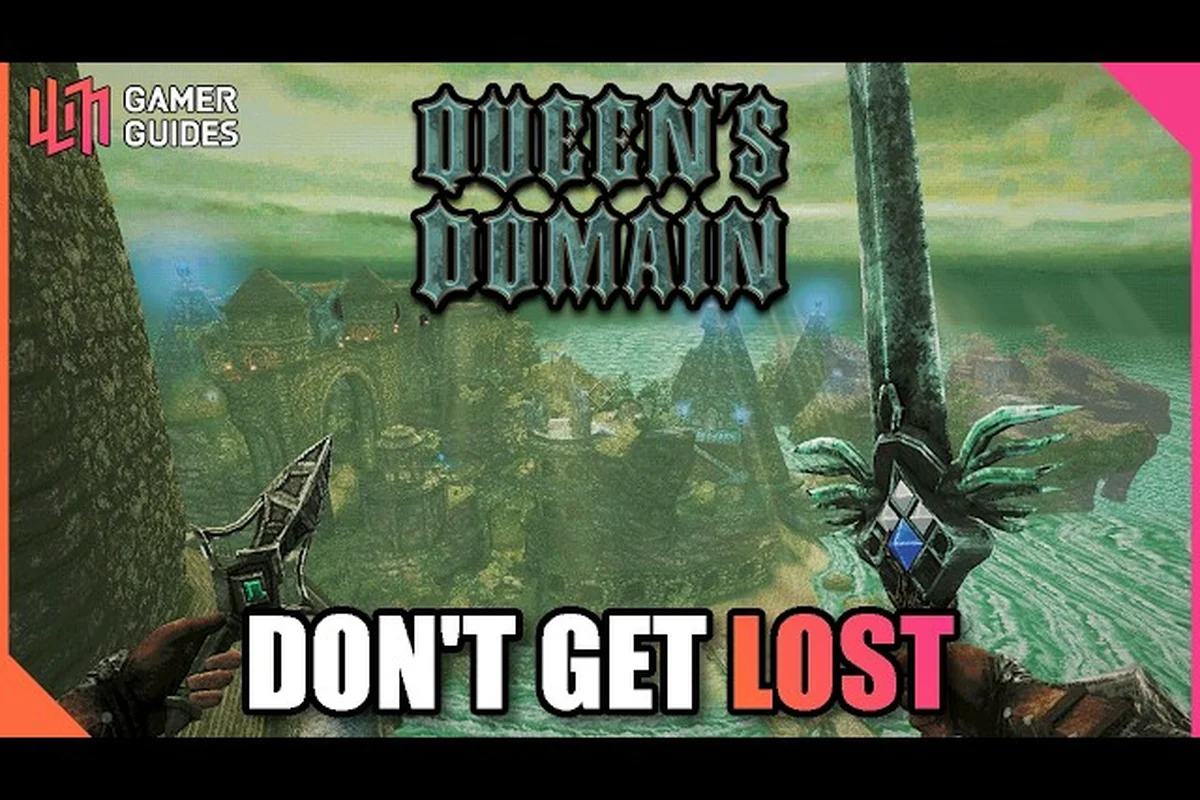
There is no published Queens Domain boss order, so the practical sequence must be inferred from enemy behavior, gate progress, flight reach, stamina limits, and upgrade access. For example, an encounter with long-range attacks and high stamina pressure should be attempted only after securing the flight and endurance upgrades that let you disengage, reposition, and survive repeated engagement; otherwise, the gate leading to it may function as a progression check rather than a true boss arena. This approach identifies the hardest Queens Domain encounters without inventing unsupported weaknesses or incorrectly classifying every enemy as a boss.
Why There Is No Official Queens Domain Boss Order
As of 2026-10-31, Queen's Domain has no official boss list, named boss sequence, phase guide, or published weakness chart. The developer has confirmed that the game contains 100+ enemies, mini bosses, and bosses combined, but that total does not reveal how many creatures are bosses or where they appear. Official launch material also shows exploration, flight, stamina-driven combat, throwing weapons, and melee equipment without presenting a chapter-by-chapter order.
That absence makes a fixed checklist misleading. A list built from early-game access, a particular route, or player memory may accidentally describe one player's exploration path rather than the intended sequence. The defensible approach is to record what the game actually gates and treat the resulting order as an inference that can be revised after further exploration.
| Question a player may ask | What is confirmed | What remains unconfirmed |
|---|---|---|
| Is there an official boss sequence? | No sequence was published as of 2026-10-31 | Any universal boss order |
| How many bosses exist? | Enemies, mini bosses, and bosses total 100+ | The size of each category |
| Are boss names published? | No boss names are available in official material | The names encountered in game |
| Are weaknesses known? | No official weakness tables exist | Reliable resistance or vulnerability rules |
| What can determine sequence? | Cliffs, flight range, access, combat readiness | A guaranteed final encounter |
This distinction also protects the broader Queen's Domain enemy list. The confirmed roster includes only the Mimic, Star Lizard, ojum lizard, and eye plants, and those names do not amount to a complete bestiary. The Executioner door is a door that could become stuck, not a boss or character, so it should never appear in a Queens Domain boss order.
Evidence Levels for an Inferred Sequence
Use three labels in a personal progression log. Verified gate means that the game physically prevents access until a condition is met. Observed gate means that a route was unavailable during testing, although the cause is uncertain. Unverified claim means that a player asserted an order without enough detail to reproduce it.
This hierarchy prevents a visually convincing encounter from being mistaken for a mandatory progression boss. It also separates a difficult mini boss from a true gate. The detailed Queen’s Domain boss overview can help distinguish those labels when reviewing an encounter.
Inferring the Boss Order From Gates and Reach
Cliffs are the principal documented traversal gate, while the Legendary Holy Sword Endu enables flight between platforms and can be upgraded for greater distance. This makes access a more reliable ordering signal than visual size. A large creature behind a reachable platform may be optional; an apparently modest encounter at the end of a flight-limited route may occupy a later position.
Building a Route Log
Record each inaccessible route in the order encountered. Note the condition, the upgrade or ability available at that point, and whether a later route confirms the same restriction. Avoid counting water return pits as bosses or progression gates because they only return the player after falling into water.
| Observation | Likely interpretation | Verification method |
|---|---|---|
| Wide gap cannot be crossed | Flight reach or upgrade gate | Return with Endu and test the same edge |
| Door will not open | Key, trigger, or route gate | Inspect the prompt and surrounding area |
| Cliff blocks upward path | Platform-access gate | Search for an alternate approach |
| Encounter appears after a new route | Possible sequence milestone | Repeat the route from the previous hub |
| Path remains open after defeat | Optional enemy or alternate sequence | Look for a more meaningful access change |
Because there is no published region list or chapter structure, avoid labels such as “chapter one” unless they are personal notes. Use physical descriptions: the first cliff gate, the route beyond the first return pit, or the platform reached after the relevant Endu upgrade. The exploration route guide provides a practical framework for organizing those observations.
Distance as a Sequence Signal
Distance from the starting shore is only a rough clue. A route may loop back through the interconnected island, and shortcuts can collapse travel time, especially when a Queens Domain boss sits behind a narrow causeway, a locked gate, or a maze-like passage. Reachability evidence should therefore outrank distance because it records why a destination became available: for example, whether an Endu upgrade unlocked the bridge, a food stat made a survival segment viable, or the strongest equipped weapon cleared the gate’s enemy. A boss that can be reached without first defeating another Queens Domain boss is a stronger candidate for an earlier encounter than one whose route depends on a later arena or optional key. Distances may help estimate the time cost, but they cannot establish a reliable Queens Domain boss order when the island’s paths overlap or reopen.
A useful test begins at the last safe hub before an obstacle. Mark the current Endu upgrade, food stat, life charm status, and strongest equipped weapon. Then attempt the route without changing equipment. If a specific upgrade opens it, the result becomes a repeatable progression checkpoint rather than a one-time observation.
This method can reveal a practical Queens Domain boss order even without official naming. It may still contain optional encounters and parallel paths, so it should never be presented as a mandatory tournament sequence. The key result is not a numbered list of invented names; it is a transparent explanation of why one encounter can reasonably be attempted before another.
Reading Queens Domain Boss Weaknesses in Game
Official material provides no documented enemy resistances, damage multipliers, stagger rules, or elemental chart. Consequently, any precise Queens Domain boss weaknesses table would be fabricated. The bestiary is the appropriate in-game source for identifying encountered creatures, and community reports can suggest patterns, but those reports should be tested against the current build.
Reading Gating Before You Commit
Test one variable at a time during a Queens Domain boss fight. Keep the same weapon for several attempts, vary only one input, and record what changes. Because no parry or block system is officially documented, do not build the strategy around parrying; media previews mention it, but that remains outside the confirmed mechanic set.
| Test | Record | Safe interpretation |
|---|---|---|
| Light attack versus heavy attack | Stamina use and time to connect | Which attack fits the current stamina budget |
| Charge attack versus light attack | Commitment and recovery | Whether added power is worth the exposure |
| Melee special versus basic string | Animation and effect | Whether the special improves the matchup |
| Throwing weapon versus melee | Range and pressure | Whether spacing creates a safer opening |
| Different food stat allocations | Survival, not damage numbers | Which preparation supports a retry loop |
The attack itself is not necessarily a weakness. A weapon-specific special may be useful because of reach, timing, mobility, or stamina efficiency rather than a documented elemental advantage. The same distinction applies to the 20+ throwing weapon types: treat them as tactical tools, not as a guaranteed weakness system.
Separate Observation From Explanation
Write raw observations before assigning causes. “Three quick attacks landed during the recovery animation” is testable. “This enemy is weak to fast weapons” requires evidence that the developer has not supplied and may not be correct. This discipline matters for a Queens Domain boss strategy because it prevents a successful test from becoming a universal rule.
| Raw observation | Acceptable conclusion | Unsupported conclusion |
|---|---|---|
| A throw created room to attack | Throwing can control spacing | Throws always break a boss |
| A special connected repeatedly | The special is effective in this test | The special is a confirmed weakness |
| Charge attacks depleted the bar | Charge is a major stamina commitment | Charge damage scales in a fixed way |
| The player recovered faster after food | Food supports preparation | One food guarantees victory |
When a Queens Domain Boss Fight Feels Too Strong
A fight feeling unwinnable is evidence of a preparation or access problem, not proof that the player has reached the hardest boss. Queen's Domain centers combat on a classic stamina meter. Charge attacks, weapon-specific specials, and repeated attacks can all consume limited resources, while the official documentation does not provide exact regeneration values or enemy health totals.
When to Upgrade, Observe or Leave
Use this sequence before attempting the encounter again. First, test ordinary attacks without charging. Second, try one weapon special while preserving stamina for movement. Third, use one throw to create space. Fourth, change food preparation or the life charm. Only after those comparisons should the player consider a different route or more extensive exploration.
| Symptom | Likely resource issue | Next adjustment |
|---|---|---|
| Health disappears before a second attack | Damage pressure or too little defense | Improve food stats or life charm, then test again |
| Stamina empties after one heavy input | Charge commitment | Use light attacks and space around the target |
| Cannot land the melee special | Reach, timing, or crowding | Circle for a clearer opening |
| The same route is blocked | Upgrade or access gate | Return to flight reach, weapons, and alternate routes |
| Fight works once but fails later | Inconsistent inputs | Repeat a fixed sequence and record each stage |
A Queens Domain hardest boss claim should therefore include the exact preparation used: equipment, upgrade state, food allocation, route, and input pattern. Without those details, the claim cannot be compared fairly. The boss strategy reference is useful for separating encounter handling from unsupported weakness claims.
Retreat as a Valid Stamina Strategy
Retreating to a safe area can preserve resources and create a new attempt with better information. The goal is not to win without taking damage; it is to complete the fight before stamina mistakes leave the player unable to respond. Because enemy behavior, health values, and phase data are not documented, the player must learn each encounter through controlled repetition.
Putting the 100+ Enemy Roster in Perspective
The 100+ combined roster is a scale statement, not a boss count. It includes ordinary enemies, mini bosses, and bosses, so a Queens Domain 100 enemies challenge is better framed as a bestiary-recognition task than a fixed boss campaign. Official naming remains limited to four creatures, and even those names do not indicate categories or sequence. Maintain the queens’ domain boss order according to the official Steam news.
Keep Separate Rosters Maintain one list for ordinary creatures, one for mini bosses, and one for bosses. The player should assign an enemy to a category only after observing how it functions and whether it gates access. Size alone is not sufficient. A towering creature can behave like regular roaming prey, while a smaller opponent may control a critical route.
| List | Inclusion rule | Sequence use |
|---|---|---|
| Ordinary enemies | Repeatedly encountered without a unique gate | Frequency, drops, and resource behavior |
| Mini bosses | Unique or limited encounter with distinct behavior | Optional or route-specific milestones |
| Bosses | Unique encounter that controls access or major progression | Primary milestones in the inferred order |
| Named creatures | Creatures with an official name | Identification, not automatic boss classification |
| Unnamed encounters | Distinct foe without a published name | Record a personal label and screenshot location |
The named Mimic, Star Lizard, ojum lizard, and eye plants should therefore be handled according to observed behavior, while the Executioner door remains excluded. The Queens Domain monster reference can support this separation between official names and personal labels.
Turning the Roster into a Progress Record
For each new enemy, record where it appears, whether access changes after the fight, how many attacks it takes, and which stamina actions remain usable. If no access changes, place it under optional encounters until more evidence emerges. If a route changes, record the previous and new reach conditions so the inferred sequence can be updated without rewriting earlier observations.
This method turns the Queens Domain enemy list from an impossible promise of complete published data into a verifiable personal catalog. It also provides a stronger foundation for later patch comparisons, because the same gate or encounter can be revisited after an update. The current 1.01.01 patch already fixed several serious issues, including a Pit of Despair soft lock, an Executioner door issue, a Mimic freeze, and missing water return pits; those changes should be distinguished from new progression rules.
A Practical Queens Domain Boss Order Checklist
An inferred order becomes useful only when another player can reproduce it from recorded evidence rather than personal memory. After each major access change in Queens Domain, update the route notes, encounter behavior, and stamina pressure, then revisit any placement supported only by a remembered difficulty spike. For example, if a flight-gated milestone becomes reachable through Endu, mark that gate as verified; if the same milestone appears in a successful run without that requirement, keep its position provisional. Label every entry as verified, inferred, or unconfirmed so later observations can strengthen the Queens Domain boss order without presenting speculation as a fixed campaign sequence.
- Record the location using physical landmarks rather than an invented region name.
- Note whether the encounter is mandatory, optional, or uncertain.
- Document the gate before the fight and any new route after it.
- Compare ordinary attacks, one charge attack, one special, and one throwing option.
- Record stamina pressure without inventing a regeneration rate.
- Check food stats and life charm effects before claiming a build is insufficient.
- Verify the result under version 1.01.01, which fixed several progression blockers.
- Label every conclusion as verified, inferred, or unconfirmed.
| Proposed milestone | Evidence needed before placement |
|---|---|
| First major route milestone | Access change or repeatable barrier |
| First significant mini boss | Distinct behavior plus location record |
| Flight-gated milestone | Endu reach or upgrade requirement |
| Later hard encounter | Repeated survival challenge with recorded preparation |
| Final encounter | No official evidence; do not label it final without proof |
The resulting Queens Domain boss order should remain provisional. New shortcuts, upgrades, or observations can move an encounter earlier or later in practical progression, and the absence of official phase and weakness data means no single list can promise an exact campaign sequence.
Frequently Asked Questions
Is there an official Queens Domain boss order?
No official boss order was documented as of 2026-10-31. The developer has confirmed 100+ enemies, mini bosses, and bosses combined, but has not published a numbered sequence, boss names, phase data, or a final encounter. The safest order is an in-game inference based on verified gates, flight reach, upgrade access, and repeatable preparation.
Can players identify official boss weaknesses?
No official weakness chart exists as of 2026-10-31. Test ordinary attacks, charge attacks, weapon-specific specials, and throwing options separately, then record what actually works against the encountered creature. A successful test can guide the current fight, although it does not establish a universal elemental or weapon rule.
What makes the hardest boss in Queen's Domain?
There is no confirmed hardest boss because official health values, phases, and comparative difficulty data are not documented. A personal hardest-boss ranking should record equipment, food stats, life charm status, flight reach, and the input sequence used. Without that evidence, comparing two encounters produces little more than an unsupported opinion.
Does the 100+ enemy count mean there are 100 bosses?
No. The official figure combines enemies, mini bosses, and bosses, but it does not provide a breakdown. Only the Mimic, Star Lizard, ojum lizard, and eye plants have published names as of 2026-10-31, and none is automatically a boss solely because it has an official name.
Should the Executioner door count in the boss order?
No. The Executioner door is a door, not a boss or character. Version 1.01.01 fixed an issue that could leave the door stuck, so a blocked route may reflect an old technical problem rather than intended progression. Confirm the current version before treating it as a gate in the inferred sequence.