
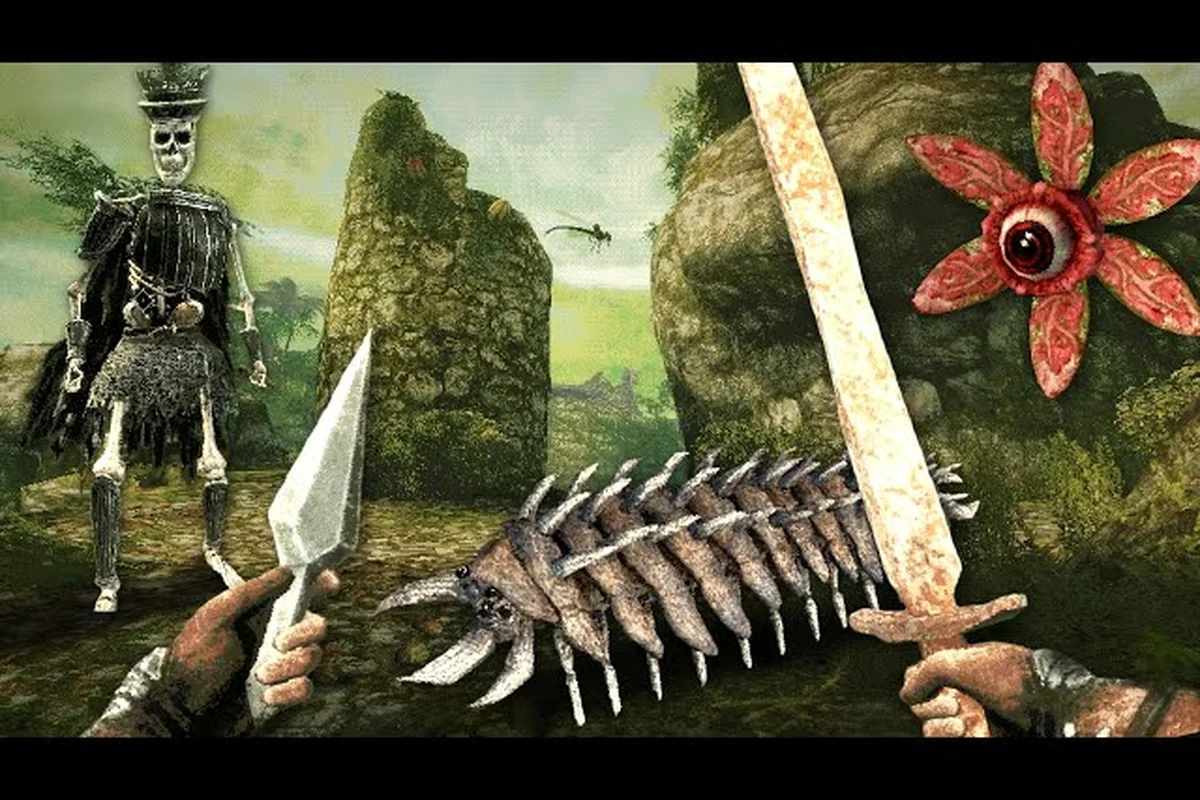
Queen's Domain enemy types can be identified with confidence by separating four named creatures from bosses, mini bosses, and ordinary enemies. The confirmed list is short, so knowing the Mimic freeze fix, loot behavior, and bestiary clues prevents invented labels and costly mistakes.
The Four Named Creatures in Queen's Domain
Official launch information for Queen's Domain names only four creatures: Mimic, Star Lizard, ojum lizard, and eye plants. The game also contains more than 100 enemies, mini bosses, and bosses combined, but the developer has not published individual names for that larger population. This distinction matters because a visually impressive enemy is not automatically a documented boss.
| Documented creature | What is confirmed | What is not documented as of 2026-10-31 |
|---|---|---|
| Mimic | A named creature involved in a freeze fixed in version 1.01.01 | Health, attacks, drops, phases, or whether every Mimic behaves identically |
| Star Lizard | A named creature with a bag-floating bug fixed in version 1.01.01 | Exact loot rules, rarity, stats, or standard behavior |
| ojum lizard | A named creature that can be cooked into roasted ojum lizard | Damage numbers, weaknesses, drop rate, or the complete cooking recipe |
| eye plants | A named creature associated with ranged-threat identification | Attack speed, range, projectile behavior, health, or drops |
The spelling matters: the official creature name is ojum lizard, with an o-j-u-m, not rojum. Its food item is called roasted ojum lizard. Players searching for “Queens Domain ojum lizard” should use that spelling in notes or inventory searches, although the creature's full bestiary behavior still needs verification inside the game.
Distinguishing a named creature from a generic enemy
The safest classification system has three levels, and the distinction matters when cross-checking reports about Queens Domain enemy types. A creature such as the Mimic or Star Lizard can be identified by name even when its behavior or encounter location is unclear, whereas an unnamed enemy, mini boss, or boss must remain a generic combat category. The Executioner door illustrates the third level because it is an environmental object, not a character; this also explains why patch references to the “stuck Executioner door” should not be treated as evidence of an additional enemy type.
-
Named creature: one of the four names above.
-
Generic combat category: an enemy, mini boss, or boss whose individual identity is not published.
-
Environmental object: the Executioner door is an example, because it is a door rather than a character or boss.
The official Steam news feed confirms that version 1.01.01 addressed the Pit of Despair soft lock, a weapon-evolution freeze, the stuck Executioner door, a Mimic freeze, missing water return pits around Neasied, and a floating Star Lizard bag. Those patch notes describe technical problems and creature references, but they do not provide a complete bestiary.
A practical identification checklist
When you encounter an unfamiliar target in the Queen’s Domain, first classify the visible silhouette before naming it: the Star Lizard and Ojum Lizard have creature-like movement and attack patterns, while Eye Plants remain stationary environmental hazards. This distinction matters because a mimic bug may resemble an ordinary small creature, yet its deception can make early identification harder than comparing the Star Lizard or Ojum Lizard directly against the bestiary. For suspected mimics, approach cautiously and confirm the target’s actual behavior before committing to a name.
-
Observe whether it moves on its own before attacking.
-
Check whether it behaves like a creature, an environmental hazard, or a trap.
-
Compare its visible design with the four confirmed names.
-
Open the bestiary and record the exact displayed label.
-
Note whether the entry distinguishes it from an ordinary enemy.
-
Verify behavior in the current version rather than assuming an old guide still applies.
This method keeps the Star Lizard, Ojum Lizard, Eye Plants, and mimic bug separate across three evidence levels: the official bestiary label, the visible silhouette, and a personal shorthand. For example, a stationary Eye Plant may look plant-like, but “Eye Plant” should remain the name of record even if a community guide calls it a flower trap; similarly, “Mimic” is useful as a behavior label without replacing the exact bestiary entry. This prevents an Executioner Door, moving lizard, or deceptive mimic bug from being mislabeled. When a nickname conflicts with the displayed name, trust the bestiary’s capitalization and wording, then record any community nickname separately as an informal descriptor rather than treating it as another confirmed enemy type.
Mimics and the 1.01.01 Freeze Fix
The Queens Domain mimic is the clearest example of why bug reports and enemy identification should be separated. Version 1.01.01 fixed a Mimic freeze, but the official notes do not describe the event that triggered it. They do not establish the creature's intended behavior, combat pattern, drops, or relationship to treasure chests.
| Question about the Mimic | Verified answer | Best in-game check |
|---|---|---|
| Is the freeze still present in version 1.01.01? | The developer lists it as fixed | Reproduce the encounter on the current version |
| What causes the freeze? | Not documented as of 2026-10-31 | Record the last action before the game locks up |
| Does the Mimic have a phase change? | Not documented as of 2026-10-31 | Watch a complete encounter without interruption |
| Does it drop a unique item? | Not documented as of 2026-10-31 | Check the bestiary and inventory after victory |
| Is it a boss? | It is a named creature, but no official boss classification is published | Use generic category labels unless the game identifies it as a boss |
The patch note confirms that a problem existed; it does not transform the Mimic into a documented boss. For encounter planning, treat it as a named creature with a confirmed historical technical issue rather than assuming it has a multi-stage fight.
Recognizing a lockup correctly
A freeze and an intentional pause can look similar if a player is unfamiliar with the presentation. The update history for the demo hotfixes and version fixes gives the correct troubleshooting context. Before recording a new bug, note the following:
-
The room or island area reached without inventing an official location name.
-
The equipped melee weapon and its weapon-specific special attack.
-
Whether a thrown item, charge attack, door interaction, or evolution occurred.
-
Whether controller input, menu input, and character movement all stopped responding.
-
Whether reloading the saved game preserves the issue.
A good report separates reproduction facts from guesses about cause. If the screen freezes after using the Mimic, that supports a report; it does not prove the Mimic is responsible. More detailed crowd-control tactics for the Queen's Domain become useful only after confirming that the game remains responsive.
Whether the historical bug affects current strategy
A fixed Mimic freeze should not be used as a reason to avoid the creature in Queen's Domain. Treat version 1.01.01 as the baseline, then verify current behavior yourself because a patched build may change the enemy interaction or state timing. For example, test the Mimic’s response to an attack while it is near an object, and compare that result with an encounter where it starts in open space. Keep one recovery plan ready, including the option to reload a save if the Mimic remains locked in an unrecoverable animation.
-
Save before beginning an unfamiliar encounter.
-
Avoid chaining multiple attacks while the Mimic is interacting with nearby objects.
-
Test the weapon's special attack separately from normal attacks.
-
Re-enter after a suspected lock rather than repeatedly mashing inputs.
-
Record whether enemies killed before death remain dead when continuing from a save, as the documented demo rule states.
The last point comes from the demo hotfix notes rather than a general enemy rule: the reported behavior concerns enemies killed before death remaining dead when continuing from a save. It can reduce repeated effort, but it should not be treated as a permanent guarantee outside the specific version and situation described by the developer. For Queen’s Domain, test this behavior with a Mimic encounter, then compare it with Star Lizards, Ojum Lizards, Eye Plants, and the Executioner Door; record whether each enemy type resets, freezes, or persists across the save-and-continue boundary.
Eye Plants as Ranged Threats
The Queens Domain eye plants belong to the confirmed creature list, but the official launch material does not publish their range, projectile speed, attack cadence, damage, or weaknesses. Calling them ranged threats is a practical combat description based on the creature's identification, not a published stat line. Their exact behavior must be verified in game.
| Observation | Practical response | Evidence status |
|---|---|---|
| The plant reacts from a distance | Create space before committing to a melee exchange | Player observation to verify |
| A projectile or eye-like effect crosses the room | Track the attack rather than staring at the target | Player observation to verify |
| Several plants are active | Prioritize the nearest visible threat | Tactical recommendation |
| The plant remains stationary | Use flight or movement to change angles | Movement is documented; plant mobility is not |
| A plant attacks during a Mimic encounter | Test the situation in a safe, repeatable area | No official multi-enemy rules are documented |
Because Queen's Domain uses a stamina-based combat system, ranged pressure matters even when damage numbers are unknown. Spending the entire stamina bar on a missed approach can leave a player exposed to a plant attack. The sensible rule is not “plants have low damage,” which no source supports, but preserve enough stamina to disengage or change position.
Handling uncertain projectile patterns
Use a repeatable test with the same melee weapon and the same environmental conditions. Observe from outside the danger area first, then record the plant's visible tell, the moment it begins an attack, and whether movement alone interrupts it. Avoid adding unsupported labels such as “armored,” “poison,” or “low-health” merely because a plant resembles a familiar fantasy enemy.
The bestiary can provide the official name and may reveal information that the launch announcement omitted. It is scrollable with a controller, so checking it after an encounter is straightforward. Treat every additional detail as provisional until it appears there or is confirmed by the developer.
| Preparation goal | Concrete action |
|---|---|
| Identify the creature | Confirm that the bestiary says eye plants |
| Learn the threat | Observe one encounter without attacking immediately |
| Protect stamina | Keep movement and one escape option available |
| Compare versions | Repeat the test after patches, especially after 1.01.01 |
| Record uncertainty | Mark unconfirmed patterns for later verification |
For example, note whether an eye plant finishes its wind-up before you leave its sightline, and record the elapsed time instead of assigning it an official status. If a Queens Domain mimic, star lizard, ojum lizard, or executioner door shows a different behavior, log the encounter separately rather than merging it into the eye plant entry. This preserves personal reference data without presenting community interpretation as an official mechanic.
Star Lizards and Ojum Lizard Loot Behavior
The Queens Domain star lizard is tied to a documented version 1.01.01 correction: its bag was floating in the air. The Queens Domain ojum lizard has a confirmed connection to cooking because it can become roasted ojum lizard. Neither patch notes nor launch documentation provides a complete drop table, so loot conclusions must remain narrow.
| Loot-related question | Star Lizard | ojum lizard |
|---|---|---|
| Exact drop rate | Not documented as of 2026-10-31 | Not documented as of 2026-10-31 |
| Unique item names | Not documented beyond the reference to a bag | Not documented beyond roasted ojum lizard |
| Bag placement issue | Floating bag fixed in version 1.01.01 | No equivalent bug documented |
| Food value | Not documented | Can be cooked into roasted ojum lizard |
| Farming method | Verify in game | Verify in game |
A floating bag is a clear technical bug, but it does not document how loot normally spawns or what the bag contains. Bug behavior and loot behavior are separate systems unless the developer explicitly connects them. This distinction prevents an incorrect conclusion such as claiming that every bag is guaranteed to hold a rare reward.
Verifying the Star Lizard bag
Test the corrected behavior by comparing the Star Lizard’s bag placement with its body orientation, because the patch addresses a floating-item issue without guaranteeing a universal ground-spawn rule. A useful case is to note the encounter timestamp, platform, and game version, then inspect whether the bag remains anchored at the expected position relative to the Star Lizard rather than merely appearing nearby. This distinction matters for distinguishing a rendering offset from a genuine drop-location change in the Queens Domain.
-
Fight a Star Lizard using the current version.
-
Observe the ground where its bag appears.
-
Check whether the bag remains visually attached to the intended position.
-
Approach from different angles to rule out perspective confusion.
-
Record the result without assuming a universal spawn rule from one encounter.
-
Check whether the bestiary supplies a definitive item description.
Because the patch record confirms only that the floating issue was addressed, repeated appearances across separate encounters provide better verification than a single isolated drop. For example, compare Star Lizard encounters in the Queens Domain on the same platform and game version, recording whether each bag stays aligned with the enemy’s body from the approach, side, and rear angles. If the bag shifts only with the camera, the result supports a Star Lizard rendering-offset explanation; if it consistently occupies the same ground position, the drop may follow a fixed placement point.
Treating the ojum lizard as a food source
The confirmed relationship is straightforward: an ojum lizard can be cooked into roasted ojum lizard. Its preparation effects, required ingredients, inventory capacity, and exact cooking conditions are not documented as of 2026-10-31. Verify them through the cooking interface rather than relying on an invented recipe.
| Cooking question | Verified status |
|---|---|
| Can an ojum lizard become food? | Yes |
| What is the resulting dish called? | Roasted ojum lizard |
| How long does cooking take? | Not documented as of 2026-10-31 |
| Which ingredient is required? | Not documented as of 2026-10-31 |
| What stat does the meal raise? | Not documented as of 2026-10-31 |
Food in Queen's Domain can raise stats, but that general rule does not reveal the ojum lizard meal's effect. For a more focused combat comparison, the ojum lizard weakness and moveset overview provides a natural companion reference while still requiring in-game verification for unconfirmed damage details.
Naming Enemies Yourself in Queen's Domain
The Queen's Domain bestiary gives players an in-game encyclopedia for verifying enemy identities, but official launch information does not provide a complete list of its entries. With more than 100 enemies, mini bosses, and bosses combined and no published boss names or phase data, personal labels should remain clearly separate from developer terminology.
| Label type | Example | Safe to use as official fact? |
|---|---|---|
| Developer-confirmed creature name | Star Lizard | Yes |
| Confirmed food name | Roasted ojum lizard | Yes |
| Generic encounter class | Ranged plant encounter | No, but useful as a descriptive note |
| Visual nickname | Floating-eye plant | No, unless clearly marked as personal shorthand |
| Guessed boss name | “The Garden Warden” | No |
| Environment label | Executioner door | Yes, but identify it as a door |
The Queens Domain executioner door is especially easy to misclassify. Version 1.01.01 fixed the door getting stuck, and the developer specifically identifies it as a door. It is not one of the four creatures, and calling it a boss or character would contradict the official patch terminology.
Build a reliable personal bestiary
A notebook or spreadsheet can turn uncertain observations about Queen’s Domain enemy types into a useful reference without presenting guesses as canon. For each encounter, record the evidence source and note whether the behavior was directly observed, reproduced, or inferred from visual cues; for example, a Star Lizard drop can be listed as confirmed only after the item appears in the loot bag, while a suspected Mimic freeze should remain marked as an unresolved regression rather than a confirmed enemy mechanic.
-
Exact displayed name: what the in-game bestiary calls the target.
-
Personal descriptor: appearance or behavior that makes it recognizable.
-
Category: creature, enemy, mini boss, boss, or environmental object.
-
Stamina behavior: what the fight does to your stamina budget, based on observation.
-
Loot result: only what you personally collected or saw confirmed.
-
Version tested: the game version and platform.
This format is especially helpful for the four confirmed names because it prevents their facts from blending with dozens of undocumented encounters. It also gives patch notes a clear target: if the Star Lizard bag floats again, or a Mimic freezes again, the record makes the regression easier to describe.
Verify instead of assuming
Use this decision process when deciding whether a Queen’s Domain enemy deserves a new label: first separate living creatures, such as the Star Lizard and Ojum Lizard, from objects that can attack, such as the mimic bug and the Executioner door. Eye plants should be classified by their visible behavior rather than assumed to be stationary scenery. If a target opens, closes, or triggers damage, check whether its role is closer to a door, trap, or environmental hazard; this prevents mechanics from being mistaken for enemy species.
| Evidence found | Classification decision |
|---|---|
| The name appears in the bestiary | Use the displayed name and quote it exactly |
| The name appears in official patch notes | Use it, but describe only the associated documented fact |
| The name appears only in community discussion | Mark it as a community nickname |
| No name is visible | Describe by appearance and location; verify in game |
| The object is an interaction target | Check whether it is a door, trap, or environmental hazard |
Community reports can help identify visual patterns, but they are not needed to establish the basic taxonomy. The strongest evidence remains the official bestiary, followed by developer patch notes. This hierarchy keeps a guide dependable even when the broader enemy list remains unpublished.
Frequently Asked Questions
What are the four named Queen's Domain enemy types?
The four officially named creatures are Mimic, Star Lizard, ojum lizard, and eye plants. The spelling “ojum” is confirmed. Other enemies, mini bosses, and bosses exist within a total population exceeding 100, but individual names and phase data are not documented as of 2026-10-31.
Is the Mimic freeze still present in Queen's Domain?
Version 1.01.01 fixed the documented Mimic freeze, so that release is the current confirmed baseline. The exact trigger remains unpublished, so reproduce the encounter on version 1.01.01 before reporting a regression. Record the last action, equipped weapon, nearby objects, and whether every input stops responding.
Does the Star Lizard always drop a bag?
The patch notes confirm that a Star Lizard bag was floating in the air and that version 1.01.01 corrected the issue. They do not publish a drop rate, bag contents, or whether every defeated Star Lizard produces one. Confirm the result through repeated encounters and the bestiary.
Is the Executioner door a boss in Queen's Domain?
No. The official update identifies it as a door that could get stuck, and version 1.01.01 fixed that problem. Its name should not be used to invent a fifth creature, boss, or character. If the door remains blocked, follow the dedicated Executioner door recovery guide.
Can an ojum lizard be used as food?
Yes. An ojum lizard can be cooked into roasted ojum lizard. The required ingredients, cooking time, and resulting stat effect are not documented as of 2026-10-31, so verify those details through the cooking interface before planning a food run. The clearest takeaway is that Queen's Domain enemy types divide into four documented creatures and a much larger unnamed population. Use official names where available, describe everything else cautiously, and let version 1.01.01 be the baseline for the Mimic freeze and Star Lizard bag corrections.