
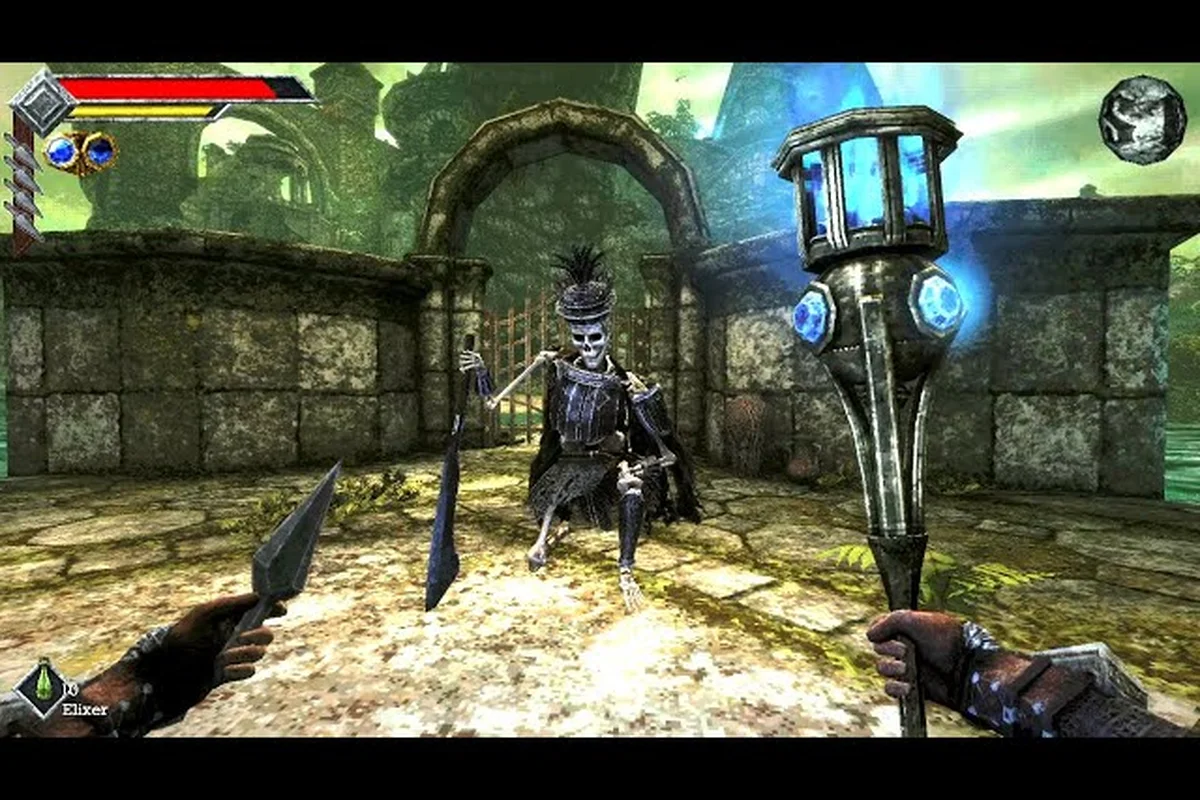
Queen’s Domain weapon stats are not published numerically, so meaningful comparison depends on reach, attack speed, special-attack cost, and upgrade potential. A long-range weapon may secure safer early clears but feel slow against close enemies, while a faster weapon can create openings for critical hits at the cost of weaker stagger. Special-attack cost also changes when a weapon becomes worthwhile: saving charges for a difficult boss or elite encounter can outperform simply using the strongest hit every time. Because confirmed damage and unlock data are limited, evaluating Queen’s Domain weapons by these practical attributes helps identify a strong early option and a late-game choice without inventing damage values.
Published Facts Behind Queen's Domain Weapon Attributes
Queen's Domain has an unusually large weapon catalog, but the developer has not published numerical stats, named weapons, damage values, or a formal tier list as of 2026-10-31. The official information confirms 50+ findable melee weapons, 20+ secondary throwing weapons, weapon upgrades, evolution, and a special attack unique to every melee weapon.
This creates a practical problem: the best-looking weapon cannot be ranked from damage charts because no charts exist. Since the published system confirms 50+ melee weapons and 20+ throwing weapons but leaves damage, reach, speed, range, cooldown, and upgrade costs undocumented, weapon evaluation must come from direct observation. A useful comparison is to note how each weapon handles your preferred encounter style—for example, whether a melee option delivers a faster multi-hit attack for crowded encounters or a heavier special attack for boss fights—then treat those observations as practical benchmarks rather than an official tier ranking.
| Published weapon system | Confirmed information | What remains undocumented |
|---|---|---|
| Melee weapons | 50+ types can be found, equipped, and upgraded | Names, damage, reach, speed, cost |
| Throwing weapons | 20+ types of secondary weapons | Names, damage, range, cooldown |
| Special attacks | Every melee weapon has a weapon-specific attack | Cost, damage, animation, duration |
| Upgrades | Weapons can be upgraded | Materials, levels, exact improvements |
| Evolution | Weapon evolution is confirmed | Conditions, forms, effects |
Confirmed mechanics that affect comparison
Three confirmed systems shape every weapon comparison. First, combat uses a stamina meter and includes charge attacks. Second, each melee weapon possesses a weapon-specific special attack. Third, the Legendary Holy Sword Endu provides flight, while upgrading it extends flight distance.
These systems matter because raw speed alone does not determine usefulness. A slower weapon may trade a small amount of speed for greater reach, safer spacing, or a special attack that solves a particular defensive problem. Likewise, a rapid weapon can feel excellent against small targets but become exhausting during repeated encounters because each swing, dodge, and special action competes for the same stamina resource.
What “weapon stats” can honestly mean
When examining Queen's Domain weapon attributes, use observable measurements rather than guessed damage tiers. Record how many swings fit into one comfortable attack window, whether the weapon's arc reaches around a corner, how often its special attack remains usable, and what happens when the stamina meter is already low.
These observations form a practical statistical profile even when the game does not display the underlying numbers. They also explain why community comparisons can differ: two players may face different enemies, test different upgrade stages, or mistake animation length for actual attack speed.
A Practical Queen's Domain Weapon Comparison System
A sound Queen's Domain weapon comparison begins by separating handling from performance. The developer confirms weapon behavior and upgrade paths, but does not document numerical attributes. That makes reach, animation speed, stamina pressure, special utility, and upgrade room the safest criteria for an equipment decision.
Five criteria to score after each pickup
Test a new weapon against an ordinary enemy first, then repeat the exact same sequence against a tougher target. Keep equipment, upgrade materials, and ability loadout unchanged during the trial, because swapping gear midway can distort speed, reach, and stamina-pressure results. For example, use one weapon for the same three-hit combo against both targets and compare stamina loss after the final swing; changing a sigil halfway through makes the Queens Domain weapon comparison unreliable.
| Criterion | Simple test | Better result |
|---|---|---|
| Reach | Strike at the greatest safe distance | Fewer missed swings |
| Speed feel | Perform the same three-hit sequence | Quicker repeatable offense |
| Stamina pressure | Attack until the meter is low | Less frequent depletion |
| Special utility | Trigger the unique special | Clear situational advantage |
| Upgrade room | Compare upgrade materials | More durable progression path |
Give each category a rating from one to five based on direct observation. Reach rating is the most useful surrogate for an unpublished range attribute: stand at a fixed distance, compare where the attack connects, and record the result rather than guessing from the model.
Interpret speed without inventing frame data
Speed should be divided into swing speed, recovery speed, and practical attack rate. A weapon can begin a swing quickly but recover slowly, making it less efficient in a long encounter. Charge attacks also add another layer because the charging phase consumes time before the strike resolves.
Never assign exact frame counts or milliseconds unless they appear in an official source. Instead, use repeatable labels such as quick, moderate, or slow when comparing Queens Domain weapon attributes, because these categories preserve observable differences without presenting invented timing data as confirmed values. Player experience can support these labels, but they remain observations rather than developer-confirmed measurements; for example, a weapon that feels slow to recover may still deliver a faster practical attack rate if its cooldown is shorter and fewer attacks are interrupted during a combo.
Read the stamina economy
Stamina is the central confirmed constraint. A weapon is economical when it preserves enough stamina to retreat, dodge, or follow up with another attack. A weapon that wins quickly but leaves no recovery margin may perform worse than a slightly slower option against resilient enemies.
Useful Queens Domain weapon attributes to record include stamina consumed per basic swing, whether the special attack drains the meter, and whether a missed swing creates a longer vulnerable recovery. Exact recovery rate is not documented as of 2026-10-31, so verify it directly and avoid converting your visual estimate into an invented percentage.
Combine the criteria into a use case
A comparison matrix becomes more useful when it describes roles rather than declaring an unsupported winner, because Queen’s Domain weapon stats are most meaningful in relation to reach, attack speed, stamina cost, special effects, upgrade potential, and range. For example, a long-reach weapon can create safer spacing in a tight corridor, while a fast-feeling weapon may shorten repeated melee exchanges if its stamina drain remains manageable. Consider these evidence-based profiles.
| Weapon profile | Best use | Main strength | Main trade-off |
|---|---|---|---|
| Long-reach | Tight rooms, cautious play | Safety and spacing | May feel slower |
| Fast-feeling | Repeated close combat | Rapid pressure | Can consume stamina quickly |
| Special-purpose | Unusual encounters | Unique utility | Cost and animation vary |
| Upgradeable | Long playthroughs | Progression potential | Requires materials |
| Throwing backup | Ranged pressure | Distance and disruption | Melee remains dependent |
This approach avoids a false official tier list while still producing a personal Queen's Domain weapon comparison that can guide your loadout. For example, if reach matters more than repeated hits, prioritize a long-reach weapon with lower stamina cost; if rapid melee pressure is the goal, compare attack speed against the stamina cost of each swing. Upgrade potential and special effects should determine the choice for longer runs, while a throwing backup can cover enemies that are difficult to reach. Read the table as a role-based decision aid rather than a ranking of Queen’s Domain weapon stats, and revisit the comparison when weapon locations, upgrade materials, or your preferred fighting range change.
Where to Find Weapons in Queen's Domain
Weapon locations are not documented as of 2026-10-31. There is no published region list, dungeon floor list, chest table, merchant list, or drop-rate chart for the island of Neasied. Therefore, the best answer to Queen's Domain where to find weapons is a repeatable exploration method rather than an invented map marker.
The official Steam news page confirms that the world is one interconnected island with secrets and shortcuts. It also records a version 1.01.01 fix for a freeze when weapons evolve. That correction is relevant to testing: update the game before judging the evolution system, and avoid assuming a bug reflects the intended behavior. As the official Steam news page explains, the queens domain weapon stats reflect the game’s weapon data and mechanics.
Verification workflow for a suspected weapon location When you find a chest, enemy drop, shrine, shortcut, or locked route, record enough context to recognize it later without relying on a made-up region name. Include the specific pickup object, nearby landmarks, access conditions, and any visual or mechanical cues tied to Queen’s Domain weapon locations. For example, note whether the chest is beside a shrine, guarded by a specific enemy type, or opened only after solving a nearby lock puzzle; also preserve the weapon’s appearance and location if known, so later weapon-location checks remain useful even when ordinary enemy drops do not respawn after death.
| Step | Action | Record |
|---|---|---|
| 1 | Defeat or inspect the source | Exact pickup object |
| 2 | Compare with equipped gear | New or duplicate |
| 3 | Test the weapon | Reach and speed profile |
| 4 | Check upgrades | Required materials |
| 5 | Return to the source | Drop behavior and access route |
This method makes Queen's Domain weapon locations practical for your own notes. Even if the game offers no respawn of ordinary enemies after death, exploration routes and environmental pickups remain worth cataloging; the save-and-continue behavior was documented in the demo hotfix notes rather than as a permanent guarantee for every source.
Separate reliable sources from uncertain clues
Chests and visible pickup objects are direct evidence. A glowing enemy, unusual sound, or empty container may suggest a hidden drop but does not guarantee one. Mark those clues separately until you reproduce them. Community reports can also help prioritize exploration, provided you treat them as player experience rather than official drop data.
Use the broader Queen's Domain weapons overview to organize confirmed weapon categories, then apply the location log above to discoveries you personally verify. The overview helps define what counts as melee, throwing, or another equipment type without pretending that a named tier list exists.
Build a repeatable route log
A useful log contains the pickup source, surrounding visual landmarks, access condition, and whether the source appeared once. Avoid assigning an invented location name such as an unofficial cave or dungeon floor. Instead, describe what is visibly present: behind a climbable ledge, beyond a shortcut gate, beside a specific environmental feature, or in a container opened after a puzzle.
Repeat the route with a different melee weapon equipped and note whether the same object remains. This confirms whether the result came from exploration or your current loadout. The Holy Sword Endu deserves separate handling because it is a confirmed traversal tool, while weapon evolution exists as a confirmed system whose exact conditions are not documented as of 2026-10-31.
Early Queen's Domain Weapon Choices by Criteria
No weapon can be named the Queen's Domain best early weapon from official information because even individual weapon names remain unpublished as of 2026-10-31. An early selection should instead favor a clear handling profile, manageable stamina use, and an upgrade path that you can actually continue.
Choose handling that supports learning
At the beginning, consistency matters more than a theoretical late-game ceiling. Prefer a weapon whose reach lets you land visible hits, whose basic attack does not drain the meter too aggressively, and whose recovery leaves room to retreat. Charge attacks should be tested on a safe target because the game confirms that they exist without documenting their precise cost.
| Early situation | Preferred comparison criteria | Verify before committing |
|---|---|---|
| Learning basic combat | Speed feel and stamina pressure | Can you still retreat? |
| Fighting in confined spaces | Reach and swing arc | Does it hit reliably? |
| Using charge attacks | Charging and recovery | Is the meter sustainable? |
| Carrying a throwing backup | Handling of both weapon types | Does the backup change melee timing? |
Favor an upgrade path you understand
Every melee weapon can be upgraded, but the exact material requirements and upgrade levels are not documented as of 2026-10-31. Inspect the upgrade interface before committing. If the first cost is easy to understand and the effect is visible, that weapon may be more practical than a theoretical stronger drop with less accessible progression.
The dedicated weapon upgrade and evolution guide provides a closer look at the confirmed upgrade and evolution systems. In your own checklist, record whether an upgrade improves speed, reach, appearance, or special behavior, because those improvement categories are practical observations rather than published stat lines.
Early-game decision tree
Start by comparing the first several melee weapons through their damage, attack speed, reach, and stamina cost rather than judging them by rarity or appearance alone. For example, a heavier Queens Domain weapon may deal more damage per hit but require more stamina, while a lighter weapon can sustain faster swings when stamina regeneration is the deciding factor. Use those weapon attributes to narrow the early-game choice before checking where each item appears and which upgrade path your current materials support.
-
Confirm the pickup by checking the inventory and equipping it.
-
Test the basic swing against a common enemy without using special attacks.
-
Test the special attack and note its stamina use.
-
Compare upgrade requirements with your available materials.
-
Retest after upgrading and record whether the handling profile improved.
This process prevents the Queens Domain best early weapon question from becoming a matter of visual preference. A longer-looking reach may be useful, but only an in-game test can show whether the arc clears an obstacle or whether the recovery is too slow for your play style.
Late Queen's Domain Weapon Comparisons by Criteria
Late-game selection should emphasize total effectiveness rather than novelty. Because no damage or enemy-health values are published, the best late weapon is the one that combines reliable hits, sustainable stamina use, a useful special attack, and an upgrade path that remains valuable against the tougher enemies found across the island.
Build a late-game test set
Use several encounter types: a fast enemy, a durable enemy, an enemy that punishes close range, and a situation where spacing is difficult. The game contains 100+ enemies, mini bosses, and bosses combined, but their exact stat totals are not documented as of 2026-10-31. Focus on behavior and consistency instead of guessed health percentages.
| Test scenario | What to measure | Why it matters |
|---|---|---|
| Fast target | Miss rate and recovery | Rewards tracking |
| Durable target | Number of safe attempts | Rewards resource control |
| Close-range threat | Special-attack value | Rewards panic options |
| Open arena | Reach and spacing | Rewards control |
| Weak point | Hit consistency | Rewards precision |
Judge the special attack by its opportunity cost
A weapon-specific special can be excellent without becoming the best choice always. Measure the meter it consumes, the time before it becomes available again if that is visible, and whether it creates enough space or damage to justify using it during ordinary encounters. Since exact values are not documented, treat your findings as a personal special-attack cost rating. For wider combat context, compare your loadout against the mechanics in the magic and secondary weapon guide. Melee and throwing weapons may solve different problems, and carrying both can change how safely a melee choice is used.
Consider upgrade maturity
A late-game weapon should not merely have access to upgrades; its final performance should meet your preferred profile. After each upgrade, repeat the same test set and compare against the previous version. Preserve useful results in a table with no claimed percentages.
| Upgrade stage | Reach | Speed feel | Stamina pressure | Special utility | Keep or replace? |
|---|---|---|---|---|---|
| Newly acquired | Record | Record | Record | Record | Provisional |
| First upgrade | Compare | Compare | Compare | Compare | Decide |
| Later upgrade | Compare | Compare | Compare | Compare | Final test |
| Evolved form, if available | Verify conditions | Retest | Retest | Retest | Update loadout |
This makes the Queens Domain best late weapon selection evidence-based rather than preference-driven. For example, if an evolved weapon retains the desired reach but raises stamina pressure after its later upgrade, mark that row as “Replace” even if its damage or special utility improves. Because the developer confirmed the relevant weapon attributes and upgrade behavior, the comparison stays grounded in verified systems; unresolved stats should remain unclaimed rather than estimated.
Final Queen's Domain Weapon Stats Checklist
Before replacing your loadout, review the complete decision in one place. You should know the weapon's reach, speed feel, stamina pressure, special utility, upgrade requirements, and acquisition source. If any item remains unknown, keep testing instead of treating the weapon as definitively superior.
| Decision point | Confirmed in game | Verify in game |
|---|---|---|
| Melee catalog | 50+ findable types | Exact type you are holding |
| Throwing catalog | 20+ secondary types | Backup behavior and utility |
| Basic attacks | Stamina-driven | Swing and recovery cost |
| Charge attacks | Available | Practical timing and cost |
| Special attacks | Unique per melee weapon | Stamina cost and effect |
| Upgrades | Available | Materials and observed improvement |
| Evolution | Confirmed | Conditions and resulting form |
The central takeaway is that Queen's Domain weapon stats cannot currently be reduced to a published damage chart. Use reach, speed feel, stamina pressure, special utility, and upgrade maturity to create your own ranking, record Queens Domain weapon locations as you explore, and update notes whenever an upgrade or evolution changes the result.
Frequently Asked Questions
Are there official damage numbers for Queen's Domain weapons?
No official damage values, attack speeds, reach measurements, or numerical special-attack costs were documented as of 2026-10-31. Compare observable behavior instead: connect range, attack cadence, stamina pressure, special utility, and upgrade results. The confirmed systems include stamina-driven combat, charge attacks, unique melee specials, and weapon upgrades.
Where is the best early weapon in Queen's Domain?
There is no documented location or name for the best early weapon because the developer has not published individual weapon names. Test each acquisition for reach, speed feel, stamina use, and upgrade accessibility. The most practical early choice is the one that lands reliable hits, preserves enough stamina to retreat, and has an upgrade path you can understand in game.
Can I make an official Queen's Domain weapon tier list?
Not an authoritative one. Although 50+ melee weapons and 20+ throwing weapons are confirmed, no official stats, tiers, or named rankings are documented. A personal tier list can still be useful if every rating comes from repeated tests against the same enemies and includes reach, speed, stamina cost, special use, and upgrade maturity.
How should late-game weapon drops be evaluated?
Compare them in a consistent test set containing fast, durable, close-range, and open-arena enemies. Measure missed swings, safe attack frequency, stamina use, and whether the weapon-specific special creates worthwhile space or pressure. Retest after upgrades or evolution, since the same weapon can change enough to alter its early and late-game value.
Does the Holy Sword Endu count as the best traversal weapon?
The Legendary Holy Sword Endu is confirmed to let the player fly between platforms, and upgrading it extends flight distance. That makes it important for traversal, but the developer has not published numerical traversal statistics or weapon rankings. Treat it as a dedicated movement tool and compare melee gear separately for combat performance.