
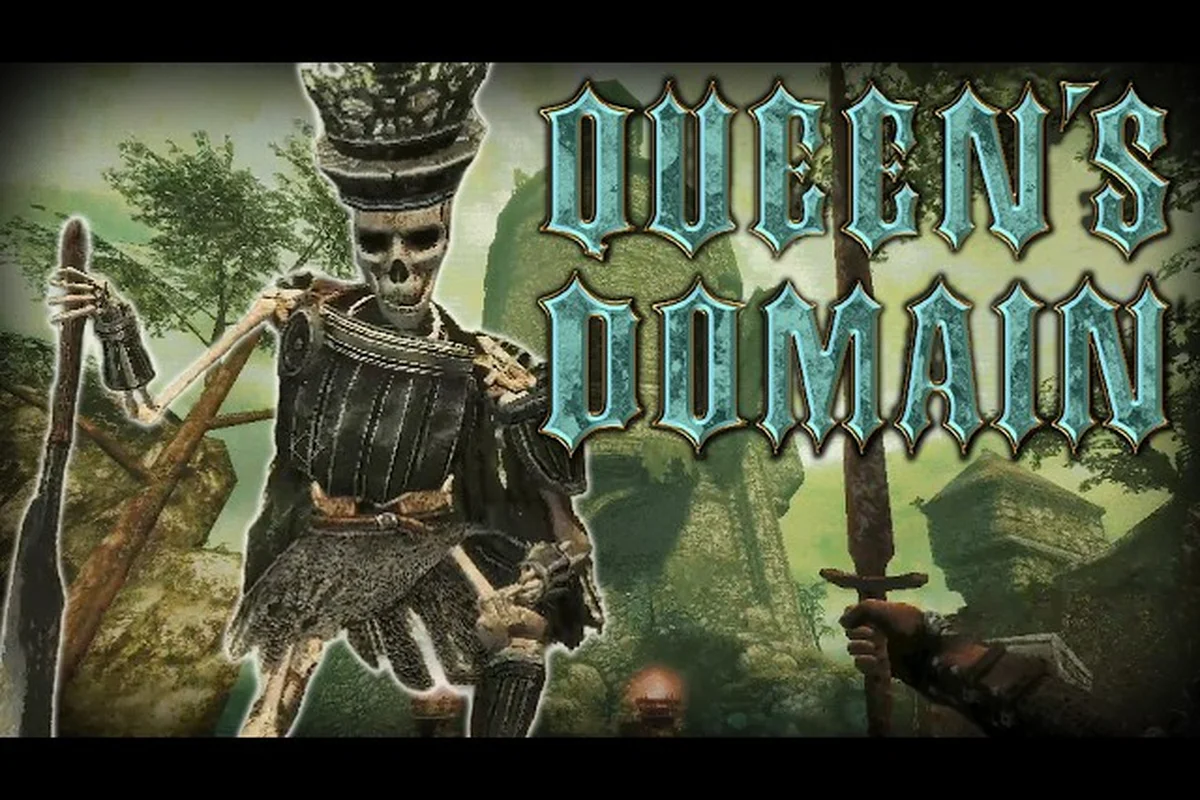
The Queens Domain labyrinth matters because navigation is the real challenge: the island is interconnected, but its routes, shortcuts, and hidden spaces are not fully documented. Learn to read the level design, test secret doors, and build a reliable exploration loop.
Queen's Domain is a first-person retro-fantasy action RPG and dungeon crawler set on an interconnected island. The developer describes one connected landscape full of secrets and shortcuts, while flight with the Legendary Holy Sword Endu provides the main way across gaps and cliffs. That combination makes exploration less about following a single road and more about recognizing how spaces connect.
The official material names only the Isle of Neasied and the Pit of Despair, so no complete region list, world map, chapter structure, or dungeon count can be confirmed as of 2026-10-31. In practice, the best approach is to observe local geometry, test suspicious boundaries, and connect previously visited routes into loops.
Why the Queens Domain Labyrinth Feels Like a Labyrinth
The labyrynth effect comes from a combination of vertical movement, interconnected spaces, and limited route signage. Queen's Domain level design places cliffs and gaps between destinations, while the Holy Sword Endu lets the player fly across those barriers and upgrade to extend the distance. You can therefore see a promising destination that is not directly reachable on foot, creating a route-planning problem rather than a simple locked-door problem.
The island's structure is officially described as interconnected and full of secrets and shortcuts. However, the game does not provide a published world map, named route network, fast-travel confirmation, or region index. The Isle of Neasied is the only named starting area, while the Pit of Despair is the only other named location in the verified baseline. A public achievement name should not be treated as a map label.
| Structure element | Confirmed status | Practical meaning |
|---|---|---|
| Interconnected island | Officially described | Expect backtracking, but not a straight corridor |
| Holy Sword Endu flight | Confirmed traversal tool | Use gaps and cliffs to open alternate routes |
| Upgraded flight distance | Confirmed | A later upgrade can change which gaps are traversable |
| World map | Not documented as of 2026-10-31 | Keep personal notes instead |
| Named regions | Only Isle of Neasied and Pit of Despair | Do not assume achievement names are locations |
| Fast travel | Not documented as of 2026-10-31 | Verify before planning around it |
Read elevation before distance
When you enter a new area, first identify the high ground, lower platforms, and visible gaps. The flight tool changes the practical question from “Can I walk there?” to “Can I reach a stable landing point?” This is especially important when a route seems to dead-end at a cliff. Look for a wall, ledge, or shadow that could be hiding a platform, then test the approach without spending unnecessary stamina.
The Queens Domain best exploration route is therefore not a fixed list of coordinates. It is a repeatable route-building method: land, scan upward, mark the return point, and test one uncertain boundary before leaving the area. If you cannot see where the next surface is, use the surrounding geometry to estimate the intended flight line, then look for a safe return path before committing.
Use personal landmarks instead of a fictional map
Because no official map is documented, create a simple landmark system based on what you can see. For example, note a distinctive cliff, statue, enemy group, water channel, or elevated platform. The Queen's Domain map guide provides a useful companion for organizing exploration notes and route order without pretending that unpublished regions exist. A practical landmark record has four fields:
| Field | Example use |
|---|---|
| Anchor | The most distinctive visual feature |
| Direction | Where it sits relative to your current route |
| Gate | Cliff, gap, water, or uncertain wall blocking access |
| Verification | What must be tested before leaving the area |
This system is especially useful for a Queens Domain labyrinth because the same connected spaces can be revisited from different elevations. A platform that seemed inaccessible from below may become a shortcut once you can fly over the first barrier and approach it from the side.
Secret Doors and How to Test Them
Secret doors are a practical search target, but the official baseline does not confirm that every suspicious wall opens, nor does it publish a universal activation rule. Treat a Queens Domain secret doors search as a sequence of controlled tests rather than a promise that every odd surface is interactive. That prevents repeated jumping, punching, or wasting time on geometry that merely looks unusual.
Use a repeatable inspection order
Begin by looking for seams, frames, recesses, and objects positioned close to a wall. Then compare the surface with nearby masonry: a door may use the same material, so color alone is weak evidence. Listen for a distinct response while moving near it, check whether an enemy or environmental object blocks the approach, and try the normal interaction command before using stronger attacks.
The testing order matters because combat can create misleading results. A cracked wall may collapse after enough damage, while a door may respond only to an interaction prompt, and an illusory surface may look structurally weak without being breakable. Separate the evidence into categories rather than treating every change as proof of a hidden passage.
| Observation | Possible interpretation | Best verification |
|---|---|---|
| Visible seam or recessed frame | Door or movable panel | Approach and use the normal interaction input |
| Repeating impact sound | Breakable surface | Apply controlled damage and watch for a state change |
| Surface blocks movement but has no seam | Possibly illusory | Test the boundary, then check alternate approaches |
| Object sits unusually close to a wall | Possible interaction marker | Inspect its position and lighting before moving it |
| Empty gap hidden by a viewpoint angle | Shortcut or overlooked route | Revisit from a higher elevation |
Record false positives
A wall that only appears to be a passage is still useful information. Mark it as a boundary rather than a door, then continue exploring around the same space. Some apparent dead ends become meaningful when viewed from another height, while others may simply be the edge of a larger room. The guide to secret walls and hidden passages can help organize those observations when you are checking whether a suspicious surface is worth another attempt.
Use a three-column log for every serious candidate: the exact visual description, the test performed, and the result. The result should be one of four states: opened, breakable, boundary, or unresolved. This prevents a failed test from being mistaken for a hidden door that you simply forgot about.
Do not confuse an opening with a shortcut
A doorway can reveal a new room without improving travel time. A shortcut is more useful when it connects two points you already visited and reduces the time spent retracing the same cliffs or corridors. Record both points when you find an opening: where you entered and where you exited. Then the Queens Domain best exploration route becomes measurable. If the new passage saves time, mark it as a loop connector; if it only leads into a new branch, keep it as an expansion point.
Illusory Walls: Evidence Status
The term Queens Domain illusory walls describes a common dungeon-crawler idea, but the developer has not documented a specific illusion-wall mechanic in the verified game information as of 2026-10-31. That does not prove that no illusory walls exist. It does mean that claims about them should be framed as observations from the game or player reports, not as a confirmed system with known triggers.
This distinction is important for level analysis. A surface may look like a wall because it blocks movement, but it could be a conventional wall, a cliff face, a visual continuation of the architecture, or a boundary created by the room layout. To classify it as illusory, you need evidence that it behaves differently from ordinary collision geometry.
Classify suspected boundaries
Start with a simple rule: movement blocking proves a boundary exists, but it does not prove the boundary is false. Look for a route that passes beyond the apparent wall from another angle, or for a visual mismatch that makes the surface appear closer than it is. If the route continues past it, that is stronger evidence for an illusion than a simple failed attack.
| Test result | Conclusion |
|---|---|
| Character cannot pass; damage has no effect | Ordinary wall or other solid boundary |
| Character cannot pass; attacks change its appearance | Potentially breakable, but verify what changed |
| A clear route exists beyond the apparent surface | Stronger evidence of an illusory wall |
| Surface disappears after a specific action | Confirmed interactive element, though its exact category may remain undocumented |
| Behavior changes after an update | Compare the current version with the earlier state |
Community reports can be useful for deciding where to look, especially when they describe a consistent visual cue, but they are not substitutes for direct testing. The verified release information includes patch notes for a Pit of Despair soft lock, a freeze involving weapon evolution, an Executioner door getting stuck, a Mimic freeze, missing water return pits around Neasied, and a floating Star Lizard bag. None of those notes establishes an illusory-wall system, so the evidence status remains unconfirmed.
Check the edges of the illusion hypothesis
The safest test is to compare the suspect wall with the architecture around it. Look for an interrupted floor line, a corner that does not meet the ceiling, a shadow that continues behind the surface, or a repeated texture pattern that ends unexpectedly. Then move to the opposite side and check whether the route makes sense in three dimensions. If it does, keep the observation; if not, classify the area as a normal boundary.
When the official game page describes the island as interconnected, that supports the existence of shortcuts but not the existence of invisible walls. You can consult the Queen's Domain on Steam for confirmed development updates, then keep any illusion discovery labeled as player-verified until the developer documents it.
Breakable Walls and Environmental Clues
Queens Domain breakable walls are also not a confirmed named feature in the official baseline. However, the game includes combat, throwing weapons, and environmental interaction, so a wall that can be damaged should be evaluated through observable state changes. The question is not merely whether the wall shakes; it is whether a structural change follows.
Separate damage, destruction, and activation
Some surfaces may register a hit but not open. Others may crumble when their support is removed or when a specific object is moved. A third possibility is a non-combat activation that resembles damage because the wall changes visually. Use the same test each time: strike once, observe, strike again, then try an interaction. This reveals whether the response is escalating or binary.
| Clue | What it may indicate | Verification |
|---|---|---|
| Dust or debris at the base | Structural surface | Repeated attacks with the same weapon type |
| Weapon impact leaves a visible mark | Damage response | Compare the mark with a nearby solid wall |
| Wall moves when an adjacent object changes | Environmental activation | Restore or alter the object's position |
| Panel slides aside after an interaction | Hidden door or mechanism | Record the required input and direction |
| Opening leads directly back to a known area | Shortcut | Compare landmarks and travel time |
Read the environment like a designer
Look for visual emphasis: torches, odd debris, missing tiles, repaired masonry, or a decorative object that does not fit the room's purpose. These are clues, not guarantees. A useful route-planning habit is to inspect the wall after every nearby environmental change. If a cracked section appears beside a movable object, test both independently before assuming they interact.
For the Queens Domain level design, environmental clues should guide a short experiment rather than a long detour. Record what you changed, what responded, and whether the result affected navigation. If a breakable wall opens, mark the route in your notes. If it only reveals a dead end, preserve that information for the next loop.
Account for resource pressure
Combat uses a stamina meter, and the game also includes charge attacks and weapon-specific special attacks. That means repeated testing can compete with your ability to handle enemies. Avoid flailing at every wall while enemies are nearby. First establish whether the surface has a visual clue, then use a controlled amount of stamina and observe whether the wall changes enough to justify another attempt.
The official material lists more than 50 melee weapons and more than 20 types of secondary throwing weapons, but it does not publish a wall-breaking hierarchy, exact durability values, or a list of tools that open particular surfaces. Any recommendation that names a guaranteed breaker would exceed the documented facts. Use the strongest practical option available, test it, and confirm whether the response is meaningful.
Planning a Queens Domain Loop Instead of a Line
A successful exploration route in Queen's Domain is a loop: enter a branch, verify one or more uncertain boundaries, and return through a different connection when possible. The developer's confirmed description of an interconnected island with secrets and shortcuts supports this approach, while the absence of a published world map means the route must be built from personal observation.
Build the loop in layers
Use three layers of planning:
-
Local loop: The room, chamber, or small platform group you can fully inspect.
-
Regional loop: A route that connects landmarks across a larger section of the island.
-
Return loop: A known path back to a safe position, camp-like resting point, or earlier landmark.
The local loop should end with a decision: continue, open, mark, or leave. The regional loop should include at least one flight or elevation change because the Holy Sword Endu is the main traversal tool. The return loop should never depend on an untested secret door.
| Route type | Purpose | Completion condition |
|---|---|---|
| Test loop | Check a suspicious door or wall | Candidate classified and logged |
| Sweep loop | Clear one small area | Boundaries and possible exits noted |
| Traversal loop | Reach a distant platform | Landing point confirmed |
| Discovery loop | Connect two known areas | New shortcut or route recorded |
| Recovery loop | Escape danger or a fall | Known return route available |
Make water a route checkpoint
Version 1.01.01 added missing water return pits around Neasied, according to the official Steam update notes. Falling into water can therefore send you back through a return mechanism rather than simply ending the attempt. Before making a long flight or entering a hazardous lower route, note the nearest known landing and return point. Do not assume every body of water behaves identically; verify the local mechanic and account for the newly corrected Neasied cases.
If a route repeatedly drops you into an unplanned area, revise the loop. Walk the upper edge first, identify where flight is genuinely needed, and test the descent only after the return path is secure. This reduces wasted progress without assuming a fast-travel system that is not documented as of 2026-10-31.
Compare route efficiency
After testing a branch, record time spent, number of returns, and whether the route reveals a new area. A shortcut that takes longer than the original path may still be valuable if it opens access to a previously unreachable platform. The criterion should therefore include both travel economy and access value.
| Result | Travel value | Access value | Decision |
|---|---|---|---|
| Same route, faster return | High | Low | Mark as a shortcut |
| Different route, similar time | Medium | Medium | Keep as a loop connector |
| Longer route, new area | Low initially | High | Mark for later use |
| No new space or time saving | Low | Low | Do not prioritize |
| Unresolved but visually distinct | Unknown | Potential | Recheck when equipped or positioned differently |
Keep the route flexible
Do not lock a Queens Domain best exploration route into a single prescribed order. The verified information does not provide a region list, chapter order, floor count, or guaranteed unlock sequence. Instead, make a priority list based on environmental confidence: confirmed passable gaps, tested doors, unresolved visual anomalies, and speculative routes. Reorder that list after each flight upgrade, because extended flight distance can alter the easiest connection between two spaces.
The core takeaway is straightforward: treat the island as a network of tested connections, not a corridor of fixed waypoints. Record what is confirmed, distinguish a door from a breakable surface or boundary, and revisit high platforms when your movement options improve. That method turns the Queens Domain labyrinth from a confusing sequence of dead ends into a navigable set of loops.
Frequently Asked Questions
Does Queen's Domain have illusory walls?
Illusory walls are not documented as an official mechanic as of 2026-10-31. Player observations may still reveal unusual boundaries, so test suspected surfaces and compare their behavior from different angles. A blocked path alone does not prove that a wall is illusory, because cliffs, ordinary walls, and room boundaries can produce the same result.
Are there breakable walls in Queen's Domain?
Breakable walls are not confirmed in the developer's published baseline, but environmental testing can reveal whether a surface responds to weapons, objects, or an interaction. Use controlled attacks, watch for structural changes, and distinguish a temporary mark from a genuine opening. The game does not publish a guaranteed wall-breaking tool.
What is the best way to find secret doors in the Queen's Domain labyrinth?
Look for seams, recessed frames, unusual lighting, and objects placed close to suspicious boundaries. Approach quietly and try the normal interaction before spending stamina on attacks. Log each candidate as opened, breakable, boundary, or unresolved so that repeated exploration becomes more efficient rather than repetitive.
Can flight reveal the entire Queen's Domain labyrinth?
Flight can reveal alternate routes, platforms, and connections, and upgrading the Holy Sword Endu extends its distance. It does not guarantee that every route, shortcut, or hidden space is visible at once. Explore in local loops, record landmarks, and return to higher viewpoints after obtaining stronger movement options.
Is there an official map for the Queen's Domain labyrinth?
No complete published world map is documented as of 2026-10-31. The official material names the Isle of Neasied and Pit of Despair, while describing the island as interconnected and full of secrets and shortcuts. Keep personal notes based on landmarks, gates, and return points, and verify any additional labels directly in game.